LBMA hopes Rand Refinery’s gold partnership with Ghana is 'first of many'

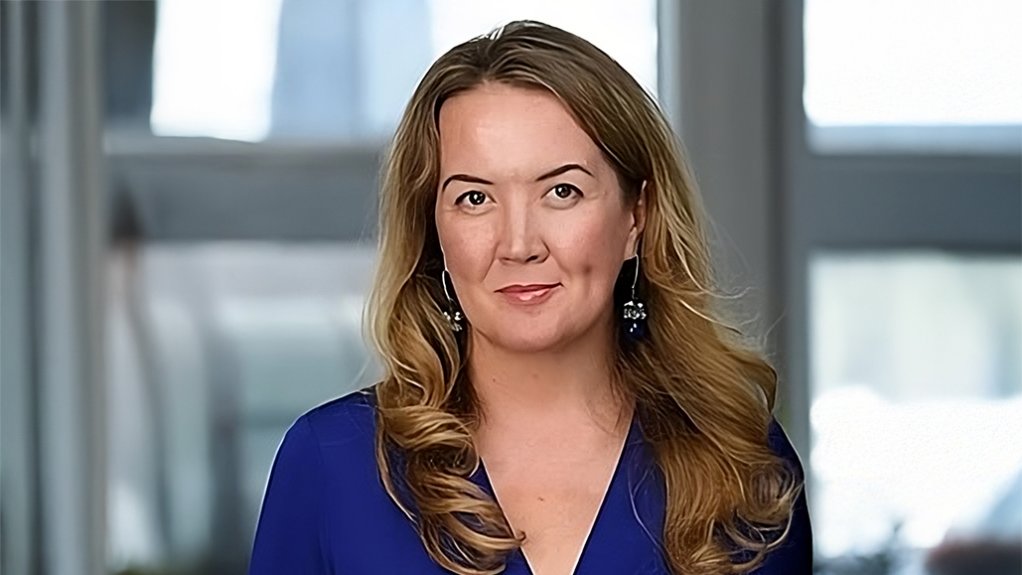



JOHANNESBURG (miningweekly.com) – I hope it's the first of many, says London Bullion Market Association (LBMA) CEO Ruth Crowell of the strategic gold partnership that South Africa’s Rand Refinery has entered into with Ghana’s Gold Coast Refinery.
In a major advance that enables local refining of artisanal and small-scale (ASM) gold and elevates West Africa's responsible sourcing standards to a new high, South Africa’s Rand Refinery, as Africa's leading LBMA good delivery accredited refiner, will provide technical, operational and commercial supervision.
Rand Refinery has also exercised major leadership in the adoption of the gold bar integrity database that traces every ounce of gold from rock to bar.
LBMA is an independent precious metals authority that advances standards for the good of the global industry. Its mission is to ensure the highest levels of leadership, integrity and transparency for the global precious metals industry by advancing standards and developing market solutions.
In an interview with Crowell on day three of the Investing in African Mining Indaba, Mining Weekly put a series of questions to Crowell and these were her replies:
LBMA has 190 refining, mining, trading, vaulting, manufacturing and transportation member companies across 27 countries. From LBMA’s perspective, what does this kind of African-to-African refining collaboration signal about the future shape of bullion markets on the continent?
Crowell: I’m delighted to see this announcement, and I hope it's the first of many. I think it is an excellent case study to demonstrate not just to other African nations but to the wider world how you can source responsibly from one of the most challenging sectors of the gold market, in terms of artisanal, small scale gold. I think the work by the government of Ghana has been excellent, but I think it's also Rand Refinery taking the view that we're not going to take everything. We need some due diligence. But we've also worked with them, with NGOs, with other governments, on creating a framework that's accepted to say these are the foundations you've got to have. It's got to be legal, it's got to be free of mercury. But it is about how we improve progressively and try to change the status quo, because boycotting is just a vote for the status quo. So, it's really exciting to see Rand Refinery taking this leadership move.
As new and emerging African refineries seek deeper integration into global markets, how important is alignment with LBMA standards in ensuring that partnerships like this translate into long-term credibility and international market access?
Well, I think it's not just LBMA standards, it's also global standards like the OECD. That's something that I think any centre, any refiner, trying to be ambitious and successful should adopt. The good news is you've got many years of examples to look at. I would also say, what's exciting about the Rand Refinery partnership in Ghana is also that Rand Refinery sees this as a Ghana story, and ultimately they agree with the ambition that they would like to see Ghana’s Gold Coast Refinery apply to be an LBMA good delivery refiner. Now, when we had the first good delivery finer in India, which wasn't that long ago, the way that was achieved was similar in terms of partnering with established players who can help you fast-track how you come up to speed, not just on the OECD guidelines on sourcing, but technical requirements, operational requirements, so being willing to learn something from people who have been doing it longer, but also being clear that they're wanting to have ownership themselves.
From LBMA’s vantage point, what are the most important trends you’re currently seeing in precious metals, both on the physical side and in financial demand?
It's hard to choose just a few, which I think is so exciting. At $5 000/oz, gold is incredibly mainstream. Investors all over the world are re-looking at gold; in a way it was discounted as fringe. It's incredibly mainstream, and there's a lot of reasons for that. The geopolitical landscape, the macroeconomic landscape, but also realising when it comes to central banks and portfolios, gold is money, everything else is credit, especially in a world where you're trying to go for more of a neutral approach, and you're not sure about the future. There is stability and a safe haven aspect that continues to play a role but I would say the West is really just starting to wake up to gold being a valuable part of the portfolio, as a key diversifier and not just a safe haven. People are also recognising that physical is king. It's not enough just to be electronic. You need to understand where the physical is, what the quality is, and how it's been securely held.
Political pressure from the White House on the independence of the US Federal Reserve has been applied and this has led to questioning of the US dollar as the reserve currency of choice. If this continues, what do you see as the longer-term repercussions for global trade, bullion flows and the role of LBMA?
If you wanted to see how the attack on the Fed is linked to the gold price, it's very easy to see the spike that came in the third quarter of last year, and you also saw the drop again when the announcement of the new Fed chair, which was a much safer, conservative choice than had been feared or expected. Part of that is because I don't think anyone is more sensitive to an attack on central banks than other central banks, and they've been huge buyers.
LBMA has renewed its engagement with international bullion centres. What role do African bullion centres play in this strategy?
Certainly South Africa has always been an international bullion centre, but we launched these recommendations five years ago to try to be a voice calling for the elimination of gold laundering. We've done a lot of work. A lot of other centres around the world have done it as well. But the reality is that as the price goes up, it becomes more and more attractive for illicit actors to access gold. It's always been an easy way to move money around. It becomes even easier as the price gets higher. So, it's calling countries and the private sector to work together on how we put controls in place and how we prioritise our efforts to stop having gold finance organised crime, and the way we do that is through transparency and a combination of being harsh on crime as well as harsh on the causes of crime.
Artisanal and small-scale ASM mining supports millions of livelihoods, particularly in Africa, but it’s also associated with real risks. How is LBMA trying to bring responsibly produced ASM gold into the formal market without compromising standards?
We're going on version 10 of our responsible gold guidance, and because we have that point of market leverage, we've made big strides in terms of raising standards around the world, but we also recognise that a lot of refiners have derisked by boycotted some of this material. Trying to see ways that we do not add to that grey market is an enormous challenge. If we continue to ignore it, it will become a bigger and bigger security concern, not just in centres where criminals are operating, but also on the ground, because people are desperate. It's a question of trying to get focused, a bit like what Rand Refinery has done in Ghana, to say this is what we can take, this is what we're not going to take, and to show a case study that you can make good business, good business, because until recently, illicit business has been pretty good business. They've been making too much money out of it. How do we drain that, change the status quo and help the communities and drive out the bad actors? It's hard and I think it's not something we can do by ourselves, which is why Rand Refinery working with the Ghana government and the international community is exciting.
Traceability is becoming a defining issue for the industry. How significant is LBMA’s gold bar Integrity database in improving transparency, and do you see it becoming a global reference point over time?
Transparency ultimately builds trust, and technology just helps bring that transparency to life. Rand Refinery has also been a big leader in the adoption of the gold bar integrity database, not just the mandatory bits, which all of our refiners have to do, but actually tracing from rock to bar where every ounce of gold has come through. There's also looking at security features, so when they're looking at the ASM, how they can do fingerprinting of the mine, so they have more certainty in terms of where this material is coming from. It allows them to engage in these tough situations with more confidence and also how they stand behind their values.
Article Enquiry
Email Article
Save Article
Feedback
To advertise email advertising@creamermedia.co.za or click here
Research Reports

Projects
Latest Multimedia
Latest News

Showroom
ECG provides specialised electrical engineering services to the Mining, Utilities, Materials Handling and Industrial industries, with extensive and...
VISIT SHOWROOM
Astore Keymak is one of South Africa’s leading suppliers of high-quality Thermoplastic Pipeline Systems, with branches in the major provinces.
VISIT SHOWROOM
Press Office
Announcements
What's On
Subscribe to improve your user experience...
Option 1 (equivalent of R125 a month):
Receive a weekly copy of Creamer Media's Engineering News & Mining Weekly magazine
(print copy for those in South Africa and e-magazine for those outside of South Africa)
Receive daily email newsletters
Access to full search results
Access archive of magazine back copies
Access to Projects in Progress
Access to ONE Research Report of your choice in PDF format
Option 2 (equivalent of R375 a month):
All benefits from Option 1
PLUS
Access to Creamer Media's Research Channel Africa for ALL Research Reports, in PDF format, on various industrial and mining sectors
including Electricity; Water; Energy Transition; Hydrogen; Roads, Rail and Ports; Coal; Gold; Platinum; Battery Metals; etc.
Already a subscriber?
Forgotten your password?
Receive weekly copy of Creamer Media's Engineering News & Mining Weekly magazine (print copy for those in South Africa and e-magazine for those outside of South Africa)
➕
Recieve daily email newsletters
➕
Access to full search results
➕
Access archive of magazine back copies
➕
Access to Projects in Progress
➕
Access to ONE Research Report of your choice in PDF format
RESEARCH CHANNEL AFRICA
R4500 (equivalent of R375 a month)
SUBSCRIBEAll benefits from Option 1
➕
Access to Creamer Media's Research Channel Africa for ALL Research Reports on various industrial and mining sectors, in PDF format, including on:
Electricity
➕
Water
➕
Energy Transition
➕
Hydrogen
➕
Roads, Rail and Ports
➕
Coal
➕
Gold
➕
Platinum
➕
Battery Metals
➕
etc.
Receive all benefits from Option 1 or Option 2 delivered to numerous people at your company
➕
Multiple User names and Passwords for simultaneous log-ins
➕
Intranet integration access to all in your organisation